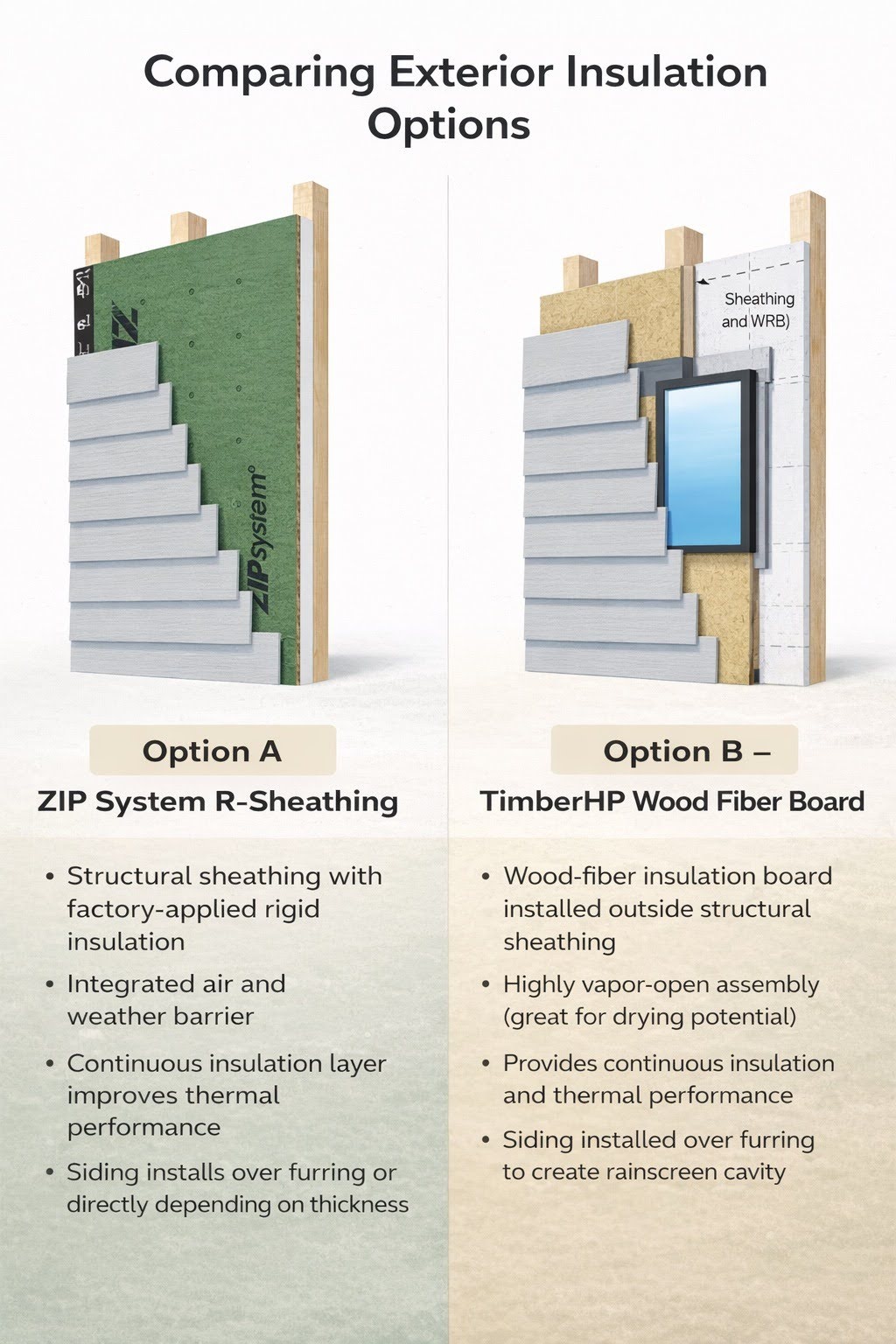
As high-performance construction continues to evolve, selecting the right exterior insulation strategy is critical to balancing energy performance, durability, constructability, and cost. At Top Notch Contracting, we evaluate systems not just on theory, but on how they perform in the field—on real projects, with real schedules. This case study compares two leading approaches: ZIP System R-Sheathing and TimberHP Wood Fiber Board assemblies.
Cost Comparison
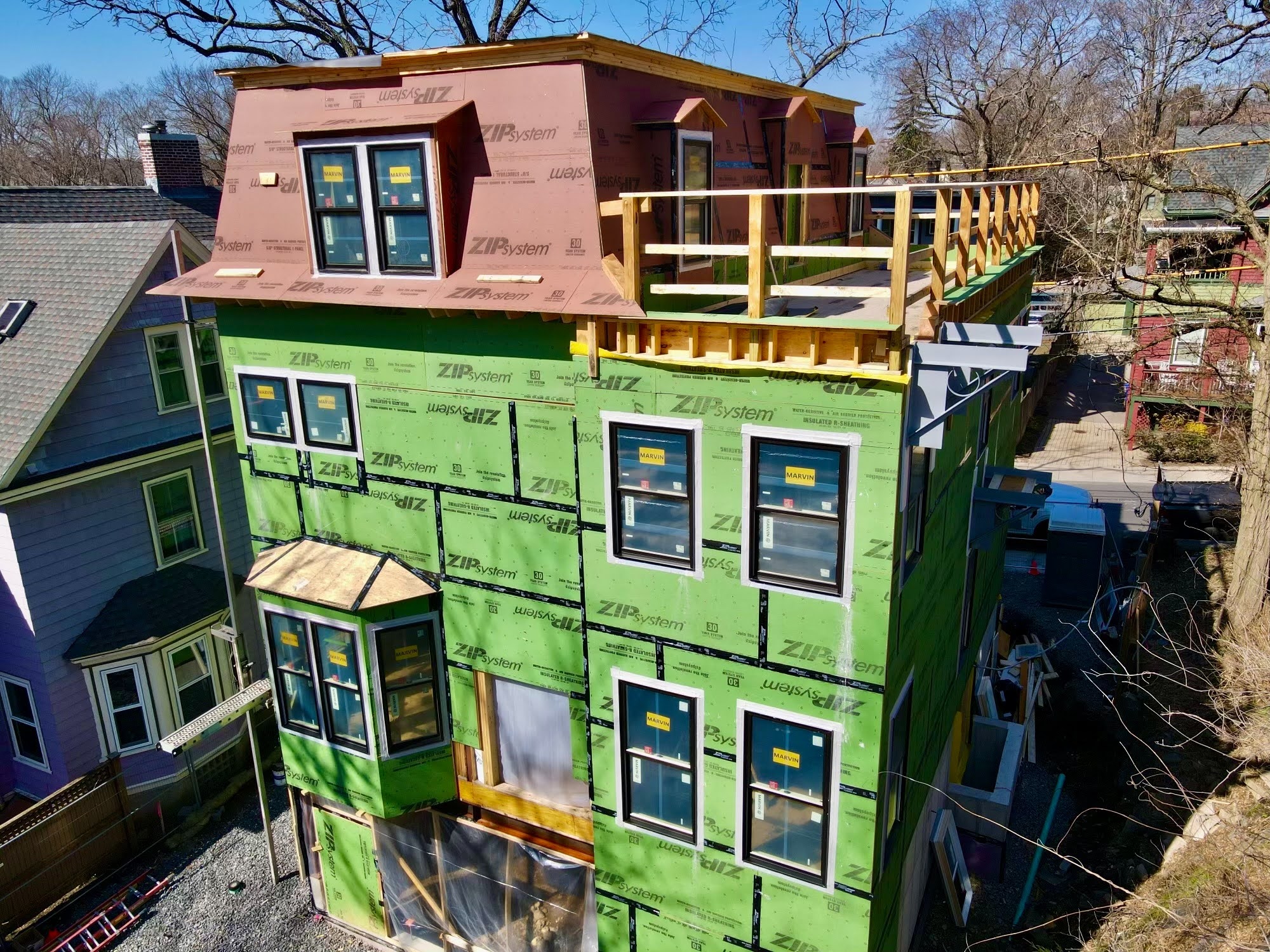
ZIP System R combines structural sheathing, insulation, and a weather-resistive barrier into a single panel system. While the material cost is higher than standard sheathing alone, it eliminates the need for separate WRB layers and reduces labor. Overall, this typically results in a lower total system cost when factoring installation efficiency and reduced trade coordination.
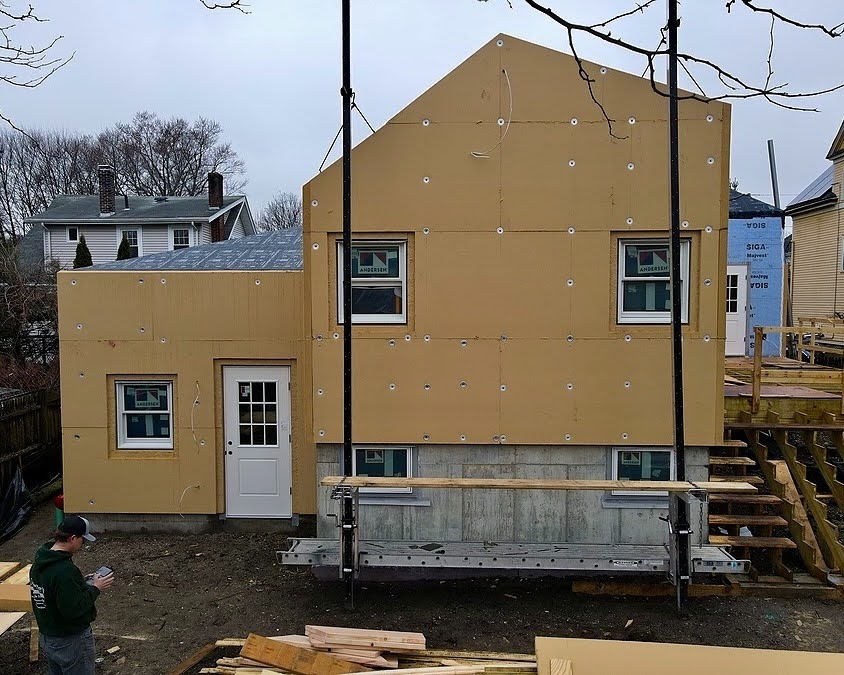
The TimberHP assembly requires multiple components, including structural sheathing, a separate WRB, exterior wood fiber insulation, and a furring system for rainscreen installation. This layered approach increases both material and labor costs and requires more sequencing between trades. As a result, TimberHP systems typically carry a higher installed cost.
Overall, ZIP System R tends to offer a more cost-efficient solution, while TimberHP represents a premium investment in building performance and durability.
Overall Performance
ZIP System R delivers strong thermal performance through continuous insulation and excels in airtightness due to its integrated air and water barrier. This results in highly efficient building envelopes with reduced air leakage. However, because the system is less vapor open, drying potential is more limited compared to alternative assemblies.
TimberHP wood fiber board provides a highly vapor-open assembly, allowing walls to dry more effectively over time. This contributes to long-term durability and resilience, particularly in climates where moisture management is critical. While it also provides continuous insulation, overall airtightness depends on the quality of the WRB installation.
In summary, ZIP System R prioritizes airtightness and energy efficiency, while TimberHP emphasizes moisture management and long-term assembly health.
Installation and Timeframe:
ZIP System R significantly streamlines the installation process by combining multiple functions into one product. With fewer steps, fewer materials, and less trade coordination, installation is faster and more predictable. This results in shorter enclosure timelines and reduced schedule risk.
TimberHP assemblies require a multi-step installation process, including sheathing, WRB application, insulation board installation, and rainscreen furring. This increases labor time and requires careful coordination between trades. The added complexity can extend project timelines and introduce more variability in execution.
From a schedule perspective, ZIP System R offers a faster and more efficient path to a dried-in structure, while TimberHP requires a longer and more deliberate installation process.
Overall Performance
ZIP System R provides a streamlined, high-performance solution with strong airtightness, faster installation, and lower overall system cost. TimberHP offers a more robust, vapor-open assembly with superior drying potential, but comes with increased cost and installation complexity.
Overall Suggested Product
At Top Notch Contracting, we do not approach this decision with a one-size-fits-all mindset. ZIP System R is often the preferred solution when schedule efficiency, cost control, and airtightness are primary drivers. TimberHP is recommended when long-term durability, vapor permeability, and building science performance are prioritized, and when the project budget supports a more advanced wall assembly.
Both systems are high-performing and viable, but they reflect different philosophies. ZIP System R focuses on efficiency, speed, and control, while TimberHP emphasizes breathability, resilience, and long-term performance. The right choice depends on the goals of the project, and our role is to guide clients and design teams toward the best-fit solution.